Explaining the Most Common Misconceptions About Home Care for Seniors
With home care for seniors being such a popular industry, surprisingly there’s still so many misconceptions around it. It’s a multi-billion dollar industry and is projected to grow even more by the early 2030’s. However, there’s still so much people don’t know about it. “How much does it cost?”, “Does insurance cover home care?”, etc. are still some of the most frequently asked questions. With Alex Comfort Living being a home care agency for seniors located in Atlanta, Ga, we’re not only dedicated to providing compassionate services. We also love offering accurate information about home care in general. Here are 10 myths we’re debunking about in-home care for seniors.
1. In-Home Care for Seniors Mean Giving Up Your Independence
One of the biggest myths regarding in-home care for seniors is that it means you’re giving up your independence. Many seniors fear asking for help, especially from an outside source means you’re losing control.
Myth Debunked:
This isn’t true at all. As a senior adult you can still be active and in control but need in-home care assistance. In-home care for seniors such as yourself actually allows you to remain safe, mobile and autonomous at home. The help of a home care aide allows you to receive the support you need that sustains your independence as you get older.
Tips for Remaining Independent While Receiving Home Care:
- Make a list of tasks you would like to still be able to perform and communicate that with your home care agency and your caregiver.
- Make a list of takes you don’t mind your caregiver completing.
- Let caregiver know you would like to still be in control of majority of tasks.
- Give yourself permission to ask for and receive help.
- Know that everyone needs in life no matter what age they are.
2. In-Home Care is Only for the Severely Sick

Another common myth about in-home care for seniors is that it’s only for the severely sick.
Myth Debunked:
Non-medical home care is not just for the severely sick or end-stage clients. Actually, a large percentage of home care seniors don’t have severe issues or they aren’t at their end-stage. Home care for seniors exist for a variety of reasons. This can range from a minor health condition, a physical ailment, assistance needed with tidying the home, or simply seeking companion care. By no means does it imply you’re severely sick.
Tips for Accepting In-Home Care While Not Being Severely Sick
- Being aware that caregivers assist with multiple non-medical in-home tasks including laundry, light housekeeping, meal preparation and more.
- There are clients from all walks of life that receive home care and they’re not severely or terminally sick.
- Non-medical home care doesn’t have to be permanent. It can be temporary assistance.
- Remember, receiving in-home assistance allows you to remain active and independent, because it gives you support and helps to lighten your load.
3. Home Care is Too Expensive
This is another common myth that gets repeated often, “home care is too expensive.” It actually get said so much that it made the question “How much does home care for seniors cost?”, a very popular question.
Myth Debunked:
The reality is home care for seniors rate varies. Yes, some can be expensive. But a lot are very affordable. The great thing about in-home care is you’re ability to personalize it. You or your family can hire an agency for a few hours during the week. You can tailor in-home care to match your specific schedule and financial needs.
Tips for Affording Home Care
- Make sure you sign up with a home care agency that don’t have an hourly minimum. Meaning, one where you can book them for however many hours you need. There is no minimum amount you have to pay for to sign up.
- Customize your package to only receive in-home care for the number of hours you need.
- Set your caregiver to come during hours when you need the most help. This way you can capitalize off his or her assistance and get your money’s worth.
4. Strangers in my home are unsafe
“Having a stranger in my home is unsafe.” Although this is a myth, it’s very understandable. Yes, having strangers in your home can be very unsafe. If the proper protocol isn’t followed.
Myth Debunked:
A professional home care agency that’s reputable perform thorough background checks to make sure all of their caretakers and aides are safe to enter your home. With our home care agency not only do we run background checks. We also provide high-quality training and are always in constant communication with our caregivers and our clients. This ensures the peace of mind for you as a senior client and your loved ones.
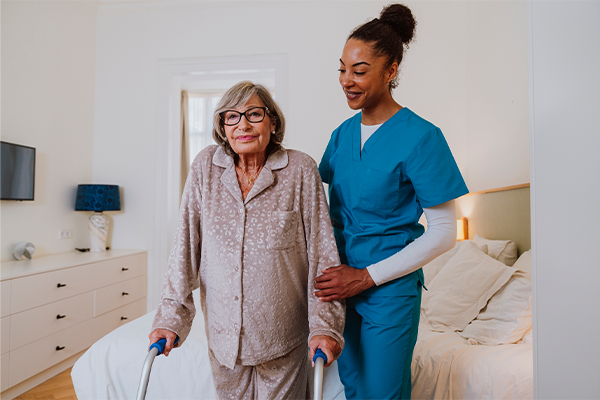
Tips for Making Sure Your Safe with the Caregiver Your Home Care Agency Provided:
- Ask your in-home care agency what types of background checks they run. There are many that can be done such as a criminal background check and a driving history check.
- Inquire about caregiver previous work history and character references.
- Request a list of the safety training and certifications caregiver have to be qualified to take care of you.
- Ask if routine or random drug tests are required for caregivers
- Ask home care agency to confirm in writing that they have completed the mandatory state and federal criminal background checks required by law, and that the caregiver is cleared for employment.
- Request home care agency show verification that they’re fully licensed and insured.
5. Home Care is Low-Quality When Compare to a Nursing Home
An unfortunate myth that gets stated about home care is that it’s low-quality when compared to a nursing home. Nothing could be further from the truth.
Myth Debunked:
This myth comes from the assumption that a facility has constant supervision and unlimited resources. While that may be true for some nursing homes. The sad reality is some of them actually lack the support many seniors need. Often times at a facility it’s easy to become a “number”, or “just another resident.” With in-home care for seniors you’re receiving one-on-one assistance that’s tailored to your specific needs. You have a direct caregiver and team you can communicate with at any time. So a lot of times in-home care actually ends up being more interpersonal and nurturing.
Tips for Ensuring Your Home Care is High-Quality
- Get a personalized in-home care plan with an agency that stress high-quality service as one of their primary attributes.
- Make sure the home care agency has a 24-hour contact number where you can reach assistance at any time.
- Communicating with home care agency if there are any times that you don’t want to be left alone. For example, if you or your loved one would like for you to be monitored overnight. Be sure to express that when setting up your personalized care plan.
6. Aging in Place Isn’t Safe
A lot of people think aging in place isn’t safe and as one gets older they’re supposed to automatically go into a facility. They asssume the senior isn’t safe at home.
Myth Debunked:
Aging in place being unsafe by default simply isn’t true. There are plenty of senior men and women who as they get older they remain home. Yes, they may have some minor health issues or conditions may arise. But with the assistance of a home care aide and the support of their family. They get the comfort of being able to age and have peace of mind knowing they can remind in the place they call home. This is the magic of hiring a home care agency. We provide you the support and nurturing you need, while you get to remain in the comfort of your own home.
Tips for Making Aging at Home Safe:
- Signing up with a home care agency who can provide you with a caregiver that will assist you in your own home.
- Setting up personalized care plan that allows you to get assistance for exact tasks you need, but also remain independent where you see fit.
- Having home care agency staff and your loved ones in constant communication with each other. This helps to ensure you safety and make sure you needs are met as a senior client above all else.
7. Medicare Covers All Home Care Services
Medicare covers all home care services, so I don’t have to worry about paying anything out of pocket.
Myth Debunked:
No, this isn’t true. Medicare can cover home health care services short-term. However, it doesn’t cover home care services. Most home care services are paid out-of-pocket or you can pay using long-term care insurance (LTCI) as a funding source. There are also some waiver programs you can apply for to pay for your non-medical in-home care services. However, there’s a difference between home care and home health care. View the chart below to get a full explanation of distinct difference betweent the two.
| Explanation of Each Term | Home Care | Home Health Care |
| Type of Care: | Non-medical support with daily tasks and activities | Skilled medical and clinical services |
| Requirements: | No doctor order needed and can be hired directly by yourself or loved ones. | Have to be ordered by a doctor and is usually short-term. |
| Tasks Include: | Dressing, bathing, meal preparation, light housekeeping and emotional support | Skilled nursing, physical therapy, wound care and medical monitoring. |
| Cost: | Out-of-pocket or sometimes through long-term care insurance (LTCI) | Covered by medicaid, medicare and private insurance plans if eligible. |
Tips for Paying for In-Home Care Services:
- Find a home care agency with reasonable prices.
- Family members collectively come up with a budget to pay for services out-of-pocket
- Apply for all state programs you may be eligible for that will give you a waiver for non-medical home care services.
8. Older Adults Cannot Learn New Things or Pick Up New Skills
Many people believe that older adults cannot learn new things or pick up new skills. They believe once you reach a certain whatever you know, you know. So non-medical home care that encourages new activities for seniors is pointless.
Myth Debunked:
Fortunately, this is very untrue. The brain is always growing and adaptss throughout life. As an older adult you can definitely learn new hobbies and skills. It’s actually better for you as a senior and keeps your mind sharp. So if you’re receiving in-home care as a senior that encourages new skills and mental activity that’s actually a good thing. That means this home care agency cares about keeping your brain active and healthy.

Tips for Learning New Skills as a Senior with a Home Caregiver:
- Ensure in your personalized plan that mental activities are implemented for you by your caregiver.
- Express to caregiver that you would like to start a new activity or hobby
- Request to be taken to a hobby you already participate in such a bingo, chair yoga, group dance classes, etc.
9. Depression and Loneliness Comes with Getting Older
Depression and loneliness comes with getting older, so utilizing home care for emotional support is unnecessary.
Myth Debunked:
Nothing could be further from the truth. Yes lonelinesss and depression can happen as one gets older. However, it’s not the standard for aging and it’s not healthy. There are plenty of older adults with reports of high levels of satisfaction and strong social connections. A lot of older adults look forward to retiring, becoming grandparents, great-grandparents, vacationing and more. So if you or a loved one are experiencing depression and loneliness hiring in-home companion care is a great route to go.
Tips for Avoiding Depression and Loneliness as a Senior Adult:
- Staying connected to family, friends and loved ones.
- Being active daily such as short walks, minor stretching and chair yoga.
- Join local senior groups such as bingo, book clubs, etc.
- Find a sense of purpose everyday. This could be through volunteering, mentoring younger adults, etc.
10. Dementia and Alzheimer’s is a Normal Part of Aging
Since dementia and Alzheimer’s is a normal part of aging why do I need in-home care assistance for it?
Myth Debunked:
Yes risks of dementia and Alzheimer’s increase with age and cases are growing more and more everyday. According to the Alzheimer’s Association, en estimated 7.4 million older Americans have Alzheimer’s disease, which is the most common type of dementia. However, it’s not a normal part of aging. Many people live well into their 80’s and 90’s with clear cognitive function. If you or a loved one have been diagnosed with dementia or Alzheimer’s you should definitely seek in-home care assistance for it. You can learn more about the misconceptions of ageing and health with this World Health Organization article.
Tips for Prevent Dementia and Alzheimer’s Disease Include:
- Exercising regularly
- Keeping up with your cardiovascular health
- Getting 7 to 8 hours of sleep each night
- Maintaining a healthy diet that includes fruits, vegetables, whole grains and healthy fats such as olive oil.
The reality is there are many more myths surrounding in-home care for seniors and the health of older adults. There may always be myths and misinformation. As a professional home care agency we make it our priority to debunk these myths as best as we can. The best thing you can do as a senior or loved one who’s interested in home care services is to always ask questions, and make sure your home care team is as transparent with you as possible.
Alex Comfort Living is a compassionate home care agency that services Atlanta, Ga and its metro areas. Discover all of our non-medical in-home care services designed to bring seniors and their loved ones peace of mind when you visit the “Our Services” page.